

The hidden workforce is a term used to describe people who are willing and able to work, but who are not actively participating in the labor market. This can include people who are unemployed, underemployed, or working in informal jobs. It is often overlooked by businesses, but it can be a valuable source of talent.
Who Are The Hidden Workers?
The hidden workforce is a diverse group of people, but some common characteristics include:
- Caregivers: People who are caring for children, elderly parents, or other family members may not be able to work full-time or in traditional jobs.
- People with disabilities: People with disabilities may face barriers to finding and keeping a job, such as discrimination or lack of accessible transportation.
- Veterans and military spouses: Veterans and military spouses may face challenges finding jobs due to frequent relocations, military deployments, or service-related injuries.
- People with criminal records: People with criminal records may face discrimination from employers, even if they have served their time and are rehabilitated.
- Immigrants and refugees: Immigrants and refugees may face language barriers, lack of work experience, or difficulty obtaining a work visa.

Why Should Businesses Care About the Hidden Workforce?
There are several reasons why businesses should care about the hidden workforce:
- Talent pool: It is a large and untapped talent pool. Businesses that can tap into this pool will have a competitive advantage in attracting and retaining top talent.
- Diversity: The hidden workforce is more diverse than the traditional workforce. This diversity can bring new ideas and perspectives to businesses, and can help them to better understand and serve their customers.
- Inclusion: Hiring from the hidden workforce can help businesses to create a more inclusive workplace. This can lead to improved employee morale, productivity, and customer service.
Statistics About the Hidden Workforce
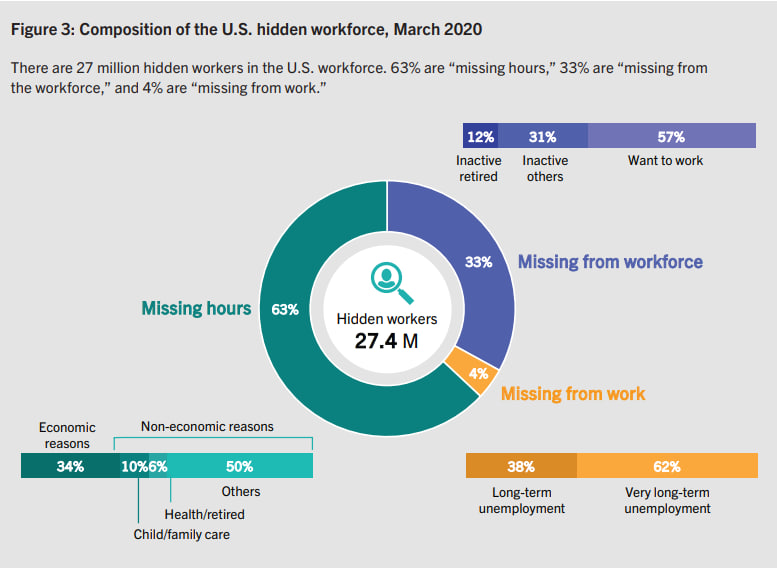
According to a Harvard Business School study, there are more than 27 million hidden workers in the United States alone.
A study by Accenture found that hidden workers make up about 17% of the workforce in the United States, the United Kingdom, and Germany.
Research by the McKinsey Global Institute found that companies that are more diverse and inclusive outperform their peers on financial metrics.
A study by the Society for Human Resource Management found that companies that have inclusive workplaces have higher employee engagement and retention rates.
How Can Businesses Tap Into the Hidden Workforce?
There are a number of things that businesses can do to tap into the hidden workforce:
- Review hiring practices: Businesses should review their hiring practices to make sure that they are not discriminating against hidden workers. This includes removing questions about criminal history from job applications and conducting blind interviews.
- Partner with community organizations: Businesses can partner with community organizations that serve hidden workers, such as non-profit organizations that work with veterans, people with disabilities, or immigrants.
- Offer flexible work arrangements: Businesses can offer flexible work arrangements, such as remote work, part-time work, and flextime, to make it easier for hidden workers to participate in the workforce.
- Create a more inclusive workplace: Businesses can create a more inclusive workplace by providing training on unconscious bias and by creating employee resource groups for hidden workers.
By tapping into the hidden workforce, businesses can access a large and untapped talent pool, improve their diversity and inclusion, and boost their bottom line.
Learn more about DEI on our recent blog post: Cultural Diversity in the Workplace: Challenges and Resolutions